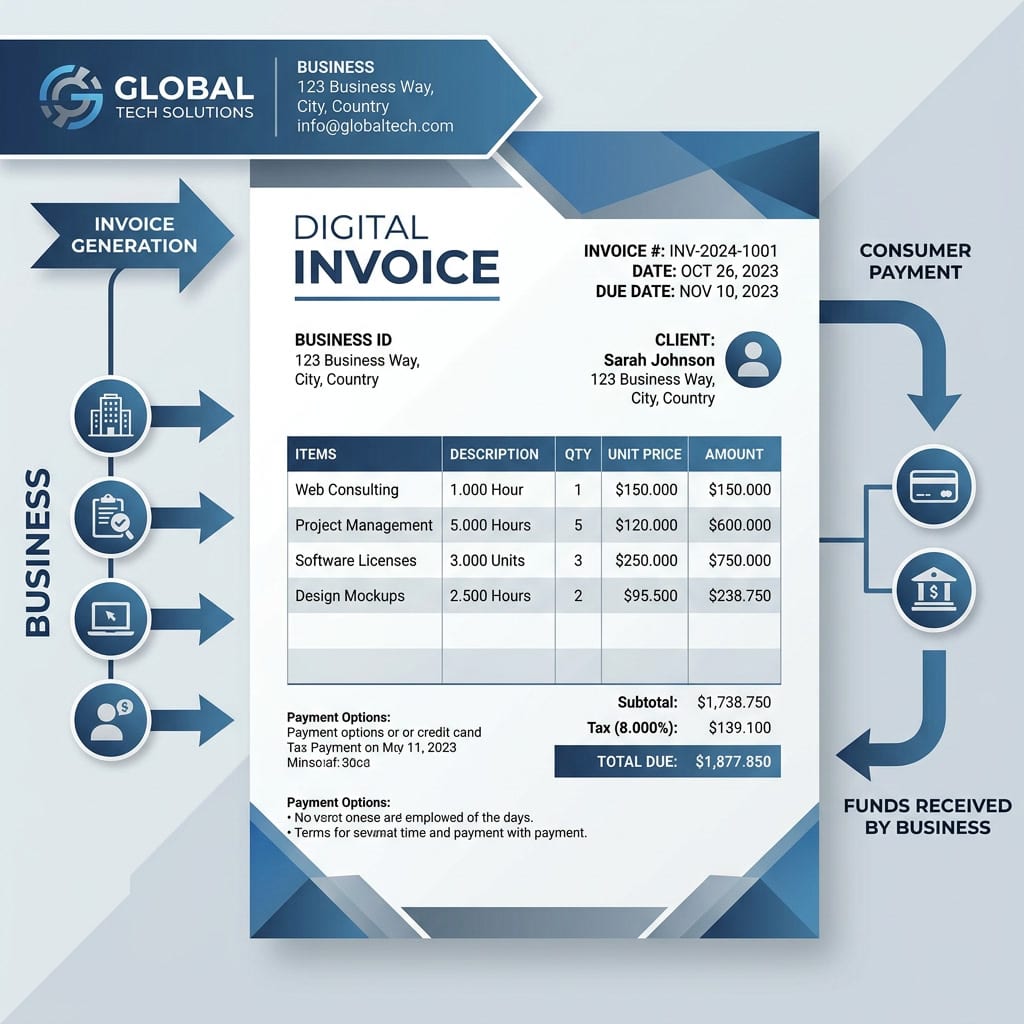


Oman's Fawtara E-Invoicing: Implementation Challenges and Solutions
Oman's Fawtara e-invoicing mandate is now active, requiring businesses to comply with new digital tax requirements. A forthcoming workshop on December 15, 2026, will address critical implementation challenges and practical solutions for businesses navigating this regulatory shift.
Key takeaways
- Oman's Fawtara e-invoicing mandate is active as of November 2026, requiring businesses to comply with new digital tax requirements.
- A workshop on December 15, 2026, will address implementation challenges, ASP selection, trading partner readiness, and fraud prevention.
- Businesses must ensure their ERP systems, such as SAP, are configured to meet Fawtara's technical specifications.
- Trading partner readiness presents a network-effect challenge, necessitating coordination across the supply chain.
Context
Oman's Fawtara e-invoicing mandate, effective as of November 2026, marks a significant step toward digitalizing the country's tax compliance framework. The mandate imposes specific obligations on businesses, necessitating the issuance and management of electronic invoices in a structured format. This shift from traditional paper-based or unstructured digital invoicing systems introduces a range of operational and technical challenges for businesses operating in Oman.
The mandate's activation signals the conclusion of the awareness phase and the beginning of practical implementation. Businesses are now required to ensure their financial, IT, and procurement systems align with the new regulatory requirements. This transition is complex, involving not only internal system upgrades but also coordination with trading partners and the selection of Accredited Service Providers (ASPs) to facilitate compliance.
Implementation Challenges and Solutions
The upcoming workshop, co-hosted by RTC Suite, Magna, and MHD Infotech on December 15, 2026, from 9:00 to 12:00 AM GMT+4, aims to address the specific implementation challenges businesses face under the Fawtara framework. The workshop agenda covers five critical areas:
Implementation Challenges: This session will explore the technical and operational hurdles businesses encounter when integrating e-invoicing systems. Topics likely include system compatibility, data migration, and the need for real-time invoice validation.
Measuring Value and ROI: Businesses must justify the investment in compliance systems. This section will provide methodologies for assessing the financial and operational benefits of e-invoicing, including cost savings from reduced manual processing and improved audit readiness.
ASP Responsibilities and Selection: ASPs act as intermediaries between businesses and the tax authority, ensuring that e-invoices meet regulatory standards. The workshop will outline the criteria for selecting ASPs, focusing on technical capability, uptime guarantees, and regulatory certification.
Trading Partner Readiness: A critical aspect of compliance is ensuring that all trading partners—suppliers and customers—are capable of exchanging Fawtara-compliant e-invoices. This session will address strategies for achieving network-wide compliance and mitigating operational disruptions.
Fraud Prevention and Audit Risks: The Fawtara mandate includes provisions for fraud prevention and audit risk management. This part of the workshop will discuss how businesses can leverage e-invoicing data to enhance transparency and reduce audit risks, as well as the potential enforcement actions by Oman's tax authority.
Implications for Businesses in Oman
The Fawtara mandate has far-reaching implications for businesses operating in Oman, particularly those reliant on enterprise resource planning (ERP) systems. RTC Suite's integration capabilities with SAP and other ERP platforms indicate that businesses using these systems will need to undertake specific technical mapping and configuration work to meet Fawtara requirements. This involves ensuring that ERP systems can generate, transmit, and store e-invoices in compliance with the mandate's technical specifications.
Additionally, businesses must consider the broader implications of trading partner readiness. Even if a business achieves internal compliance, its operations could be disrupted if counterparties are unable to exchange compliant e-invoices. This network-effect challenge necessitates proactive engagement with suppliers and customers to ensure they are also prepared for the new regulatory environment.
The fraud prevention and audit risk components of the mandate raise the stakes for data accuracy and system integrity. Businesses must ensure their e-invoicing systems are robust enough to prevent fraudulent activities and provide comprehensive audit trails. This requirement underscores the importance of selecting reliable ASPs and implementing rigorous internal controls.
Outlook and What to Watch
As businesses in Oman navigate the Fawtara e-invoicing mandate, several key developments will shape the compliance landscape in the coming months:
Regulatory Guidance: Businesses should monitor updates from Oman's tax authority for additional guidance on implementation and enforcement. Any clarifications or amendments to the mandate will be critical for ongoing compliance efforts.
ASP Market Evolution: The market for ASPs is expected to evolve as businesses seek reliable intermediaries. The performance and reliability of these providers will be closely watched, particularly their ability to handle high volumes of transactions without downtime.
ERP Vendor Support: ERP vendors like SAP will likely release updates and patches to facilitate compliance with the Fawtara framework. Businesses should stay informed about these developments and plan for necessary system upgrades.
Trading Partner Collaboration: Efforts to achieve network-wide compliance will require collaboration with trading partners. Businesses should engage in discussions and potentially provide support to ensure their entire supply chain is prepared for the new requirements.
Frequently asked questions
- What specific challenges does the Fawtara mandate pose for businesses in Oman?
- Businesses face technical and operational hurdles, including ERP integration, trading partner readiness, and the selection of reliable ASPs to ensure compliance.
- How can businesses measure the value of their Fawtara compliance investment?
- The workshop will provide methodologies for assessing financial and operational benefits, such as cost savings from reduced manual processing and improved audit readiness.
- What criteria should businesses use to select an ASP?
- Criteria include technical capability, uptime guarantees, and regulatory certification to ensure the ASP can reliably facilitate compliance with the Fawtara mandate.
- What are the implications of trading partner readiness for businesses?
- Businesses must ensure their entire supply chain can exchange compliant e-invoices to avoid operational disruptions, requiring proactive engagement with suppliers and customers.
- How does the Fawtara mandate impact fraud prevention and audit risks?
- The mandate raises the stakes for data accuracy and system integrity, as Oman's tax authority is expected to leverage e-invoicing data for enforcement.