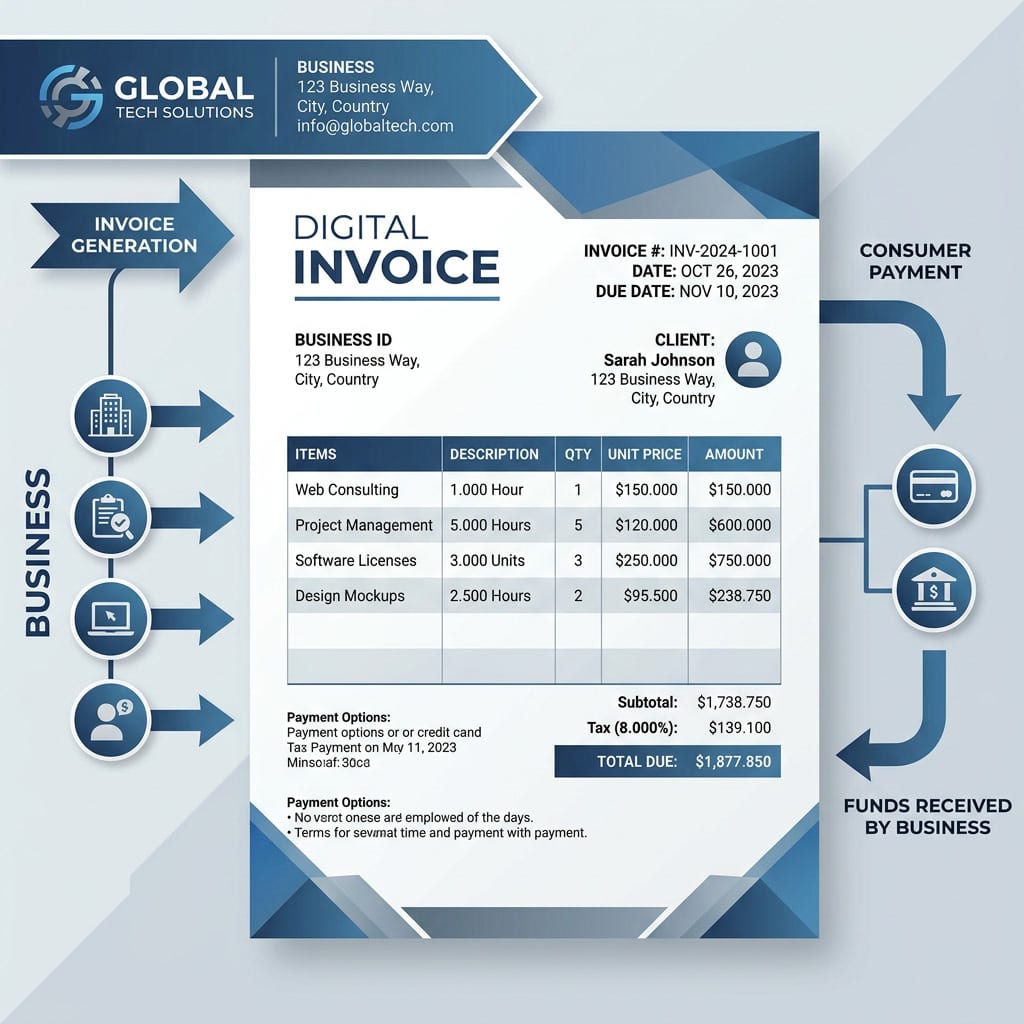


Oman Mandates XML-Based E-Invoicing for VAT-Registered Companies
Oman's Tax Authority has amended the Executive Regulation of the Value Added Tax Law to require all VAT-registered companies to issue electronic tax invoices in XML format, effective from April 1, 2027. This mandate eliminates paper invoices, PDFs, and emailed digital images as compliant tax documents.

Key takeaways
- Oman's Tax Authority has mandated XML-based e-invoicing for all VAT-registered companies, effective April 1, 2027.
- The rollout follows a structured pilot-to-mandatory transition model, with a pilot program starting at the end of August 2026.
- Phase 1 applies to companies with annual supplies exceeding RO 5 million, followed by Phase 2 for smaller businesses on October 1, 2027.
- The mandate aligns with global trends toward structured-data mandates and enhances tax compliance and efficiency.
- Businesses must ensure their invoicing systems can generate and process XML invoices and select accredited e-invoicing service providers.
Context
Oman's move to mandate XML-based electronic invoicing marks a significant step in its tax digitization agenda, aligning with global trends toward structured-data mandates. The Gulf state joins other jurisdictions like the EU and Latin American countries in enforcing e-invoicing to enhance tax compliance and reduce fraud. The requirement for invoices to be issued in XML format enables automated machine-to-machine processing between seller and buyer systems, a feature that enhances efficiency and accuracy in tax reporting.
The rollout follows a structured pilot-to-mandatory transition model. A pilot program involving 100 voluntary companies is scheduled to launch at the end of August 2026, designed to test system readiness ahead of the phased mandatory implementation. Phase 1 takes effect on April 1, 2027, applying to companies with annual supplies exceeding RO 5 million. Phase 2 follows on October 1, 2027, capturing companies below that revenue threshold.
What's Changing
The most critical change is the requirement for all VAT-registered companies to issue invoices in XML format. This structured-data approach ensures that invoices can be processed automatically between seller and buyer systems, eliminating the need for manual data entry and reducing errors. The mandate explicitly states that paper invoices, PDF invoices, and emailed digital images will no longer qualify as compliant tax invoices once the amendments take effect.
The rollout is phased to ensure a smooth transition. The pilot program, starting at the end of August 2026, will involve 100 voluntary companies to test the system's readiness. This phase is crucial for identifying any potential issues and making necessary adjustments before the mandatory implementation begins.
Phase 1 of the mandate applies from April 1, 2027, to companies with annual supplies exceeding RO 5 million. Phase 2 follows on October 1, 2027, capturing companies with annual supplies below RO 5 million. This segmented approach allows the Tax Authority to manage the transition more effectively, ensuring that larger companies, which typically have more complex invoicing systems, comply first.
Implications for Businesses
For businesses operating in Oman, the transition to XML-based e-invoicing represents a significant operational shift. Companies must ensure their invoicing systems are capable of generating and processing XML invoices, which may require significant IT investments. Additionally, businesses must select accredited e-invoicing service providers to facilitate the automated processing of invoices.
The phased implementation provides a clear timeline for compliance, allowing businesses to plan and allocate resources accordingly. However, the relatively compressed timeline between the pilot program and Phase 1 rollout means that companies must act swiftly to avoid non-compliance penalties.
Outlook and What to Watch
The success of Oman's e-invoicing mandate will depend on the effectiveness of the pilot program and the readiness of the Tax Authority's accreditation infrastructure. Compliance teams and technology vendors serving the Gulf region should treat August 2026 as the effective start of the compliance clock.
Additionally, the alignment of Oman's e-invoicing requirements with those in other jurisdictions suggests a broader trend toward standardized tax digitization practices in the Gulf region. Businesses operating in multiple Gulf states should monitor developments closely to ensure compliance with evolving regulations.
Frequently asked questions
- What formats are no longer accepted as compliant tax invoices in Oman?
- Paper invoices, PDF invoices, and emailed digital images will no longer qualify as compliant tax invoices once the amendments take effect.
- What is the timeline for the phased implementation of the e-invoicing mandate?
- The pilot program starts at the end of August 2026, Phase 1 applies from April 1, 2027, to companies with annual supplies exceeding RO 5 million, and Phase 2 follows on October 1, 2027, for smaller businesses.
- What is the significance of the XML format requirement?
- The XML format enables automated machine-to-machine processing between seller and buyer systems, enhancing efficiency and accuracy in tax reporting.
- How does Oman's e-invoicing mandate align with global trends?
- Oman's explicit XML-only requirement aligns it with structured-data mandates seen in the EU's EN 16931 standard and Latin American clearance models.
- What should businesses do to prepare for the e-invoicing mandate?
- Businesses must ensure their invoicing systems can generate and process XML invoices and select accredited e-invoicing service providers to facilitate automated processing.