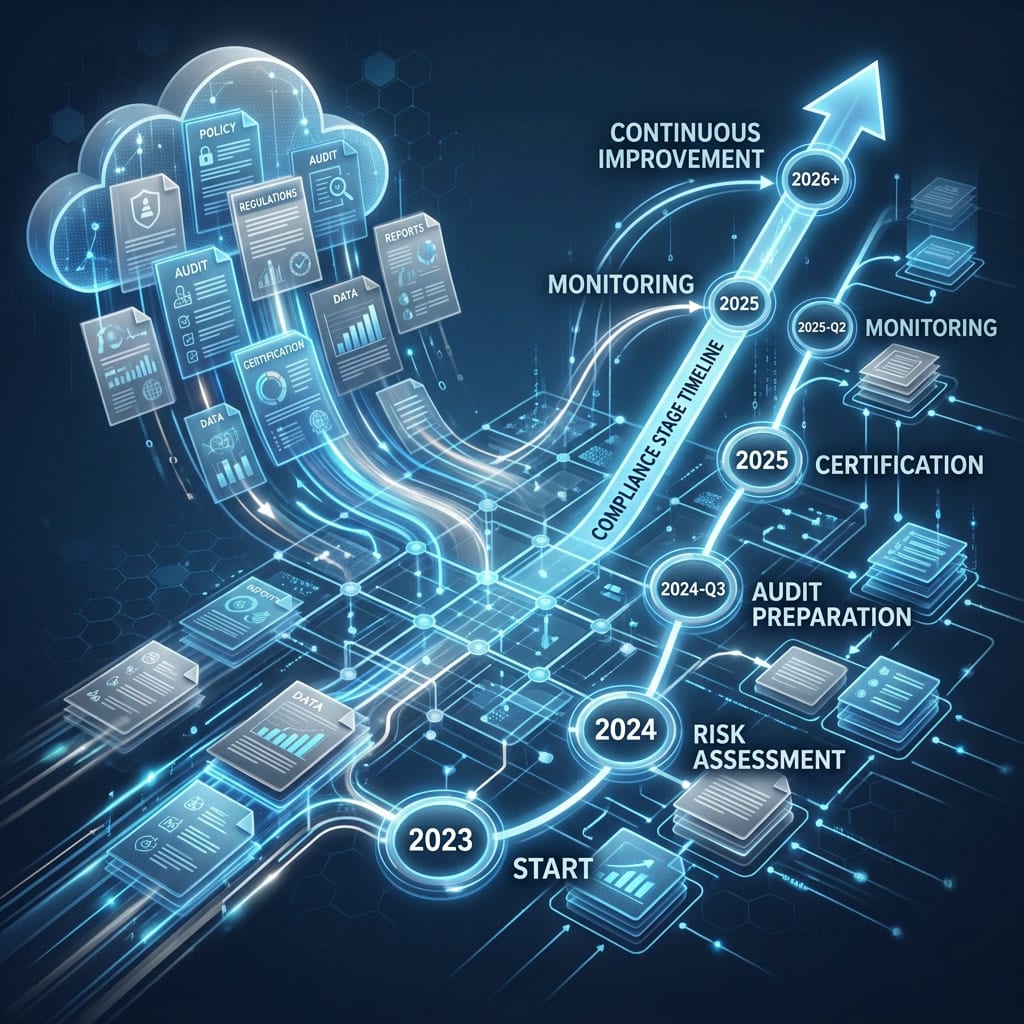
Spain's E-Invoicing Deadlines: Operational Roadmap for Gas Stations
Spain's mandatory B2B e-invoicing mandate is now legally binding, with differentiated deadlines based on turnover tiers. For gas stations, the operational complexity of integrating structured invoicing with point-of-sale systems presents unique compliance challenges.

Key takeaways
- Spain's mandatory B2B e-invoicing mandate was enacted on October 5, 2026, with deadlines staggered by turnover tier.
- Gas stations must integrate structured invoicing into point-of-sale and ERP systems, with Tier 1 operators facing a deadline of October 6, 2027.
- Smaller stations (Tier 3) will confront a simultaneous e-invoicing and Verifactu cutover in October 2028, requiring careful planning.
- The AEAT's free public e-invoicing solution will be available at least two months before each deadline.
- The Verifactu delay is intended to align with EU ViDA requirements, indicating further regulatory changes may follow.
Context
On October 5, 2026, Spain's Official State Gazette (BOE) published the mandatory B2B e-invoicing ministerial order, activating the timeline established under the Ley Crea y Crece. This marks the first legally binding step in Spain's dual-track VAT digitization agenda, which also includes Verifactu (the digital ledger system). While the Agencia Tributaria (AEAT) announced a delay for Verifactu to October 2028, this has yet to be formally enacted in the BOE.
The e-invoicing mandate applies first to companies with annual turnover exceeding €8 million, who must comply by October 6, 2027. Firms with turnover between €6 million and €8 million enrolled in the Suministro Inmediato de Información (SII) system have until October 6, 2028. Smaller operators with turnover below €6 million and not in SII will face a simultaneous convergence of both e-invoicing and Verifactu obligations around October 2028.
What's Changing
The e-invoicing mandate requires structured-data format invoices, an acceptance/rejection communication mechanism for recipients, and real-time transmission of a copy to the AEAT at the point of invoice issuance. For gas stations, this means integrating invoicing workflows with pump controllers, retail management terminals, payment processing systems, and ERP/back-office platforms.
The complexity arises from the high volume of B2B transactions with fleet operators, logistics companies, and transporters. Unlike sectors with simpler invoicing flows, fuel retailers must ensure their systems generate and transmit compliant structured invoices in real time—a challenge that demands immediate attention from IT and compliance teams.
Implications for Gas Stations
For larger fuel retail chains and multi-site operators (Tier 1), the October 6, 2027 deadline is fast approaching. These businesses must prioritize ERP and POS system upgrades to handle structured invoicing. Tier 2 operators (€6M–€8M turnover, enrolled in SII) have until October 6, 2028, but should begin system assessments now to avoid last-minute compliance risks.
Smaller independent stations (Tier 3) face the most daunting task: a simultaneous cutover to both e-invoicing and Verifactu in October 2028. The AEAT has committed to providing a free public e-invoicing solution at least two months before each deadline, offering a baseline option for operators unable to invest in full ERP integration.
Outlook
The AEAT's Verifactu delay is framed as a step toward alignment with the EU's VAT in the Digital Age (ViDA) framework, suggesting further regulatory evolution beyond 2028. Gas stations should monitor developments closely, as additional requirements may emerge.
Frequently asked questions
- What are the specific deadlines for e-invoicing in Spain?
- Companies with turnover exceeding €8 million must comply by October 6, 2027. Those with turnover between €6 million and €8 million enrolled in SII have until October 6, 2028. Smaller operators (turnover below €6 million) will implement both e-invoicing and Verifactu around October 2028.
- What are the key requirements for e-invoicing compliance?
- Gas stations must issue structured-data format invoices, include an acceptance/rejection communication mechanism for recipients, and transmit a real-time copy to the AEAT at the point of invoice issuance.
- Will there be a free e-invoicing solution available?
- Yes, the AEAT has committed to providing a free public e-invoicing solution at least two months before each applicable deadline, offering a baseline option for smaller operators.
- How does the Verifactu delay affect gas stations?
- The Verifactu delay pushes implementation to October 2028, aligning with EU ViDA requirements. However, the delay is not yet formally enacted, and gas stations should monitor for updates.
- What are the implications of the Verifactu delay?
- The delay is intended to achieve convergence with EU ViDA digital reporting requirements, suggesting further regulatory evolution beyond 2028.