


Dutch Tax Authority's Pre-Implementation Feasibility Reviews Shape 2027 Fiscal Policy
The Dutch Tax Authority's structured feasibility assessments, known as "uitvoeringstoetsen," serve as a critical quality assurance mechanism within the Dutch legislative cycle for tax-digitization policy. These assessments evaluate whether proposed rules are technically implementable, identify execution risks, and assess compliance burdens before laws are enacted.
Key takeaways
- The Dutch Tax Authority conducts approximately 150 feasibility assessments annually, with one-third focused on the 2027 Tax Plan measures.
- Assessments evaluate technical implementability, execution risks, system changes, and compliance burdens on citizens and businesses.
- The two-phase process allows for rapid analysis of amendments made during parliamentary debate, providing real-time updates on execution risks.
- Specific 2027 Tax Plan measures under review include lower stock option taxation for startups, extended excise tax reductions on fuel, and adjusted air travel tax rates.
- The Dutch system's pre-emptive policy design contrasts with jurisdictions where implementation risk assessment occurs only post-enactment.
Context
The Dutch Tax Authority (Belastingdienst) conducts approximately 150 feasibility assessments annually through its Policy Execution and Enforcement (UHB) unit. These assessments are integral to the Dutch legislative cycle, particularly during the presentation of the annual Tax Plan (Belastingplan) on Prinsjesdag, the traditional budget day. On 15 September 2026, the Cabinet presented the 2027 Tax Plan to parliament, outlining multiple fiscal proposals affecting millions of citizens and businesses. Concurrently, the Belastingdienst published its Overview of Executability (Overzicht Uitvoerbaarheid), a formal document consolidating key findings from feasibility assessments conducted since the previous parliamentary budget day.
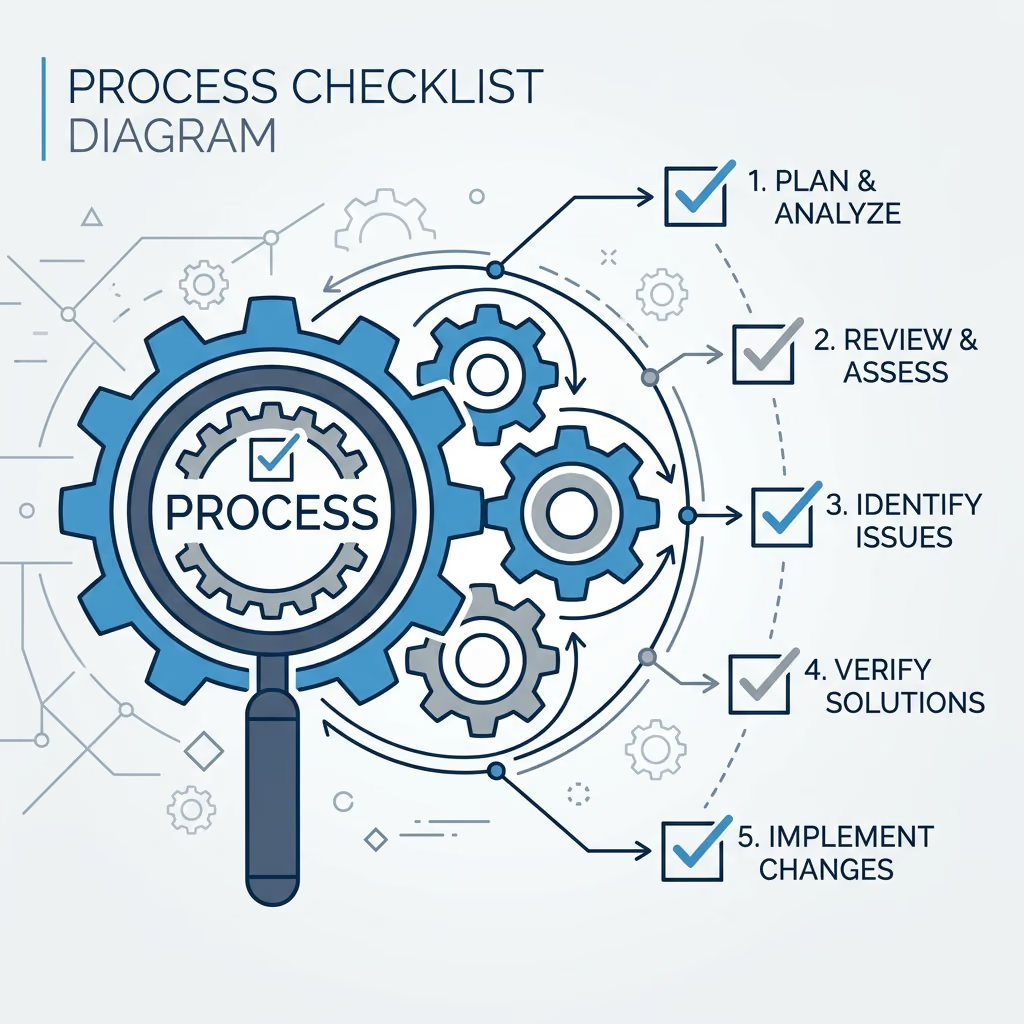
These assessments evaluate four core dimensions: (1) technical implementability by the tax authority, (2) execution risks, (3) required system changes, and (4) compliance burdens on citizens and businesses. The process operates in two phases: most assessments are completed before summer to establish a baseline, followed by a rapid-analysis phase that allows the Belastingdienst to signal updated execution risks to parliament in near-real time during active budget deliberation.
What's Changing
The 2027 Tax Plan includes several specific measures subject to feasibility assessments. These include lower stock option taxation for startups and scale-ups, extended excise tax reductions on fuel, adjusted air travel tax rates, elimination of a specific healthcare deduction, and reduction or elimination of the starter deduction. The assessments provide a structured approach to evaluate the practical implications of these proposals before they are enacted into law.
The two-phase structure of the assessments ensures that any amendments introduced during parliamentary debate can be rapidly analyzed. This allows the Belastingdienst to provide updated execution risks and compliance burden assessments in near-real time. This proactive approach contrasts with jurisdictions where implementation risk assessment occurs only post-enactment, highlighting the Dutch system's emphasis on pre-emptive policy design.
Implications for Businesses and Citizens
For businesses and citizens, the feasibility assessments provide transparency regarding the potential compliance burdens and system changes that may arise from new tax legislation. The assessments help identify any technical challenges or risks associated with the implementation of proposed rules, allowing stakeholders to prepare accordingly. The rapid-analysis phase ensures that any amendments made during parliamentary debate are swiftly evaluated, providing up-to-date information on the execution risks and compliance burdens.
The Dutch Tax Authority's structured approach to feasibility assessments serves as a model for other jurisdictions looking to integrate implementation feasibility into the legislative design process. By formally communicating these findings back into the legislative cycle, the Belastingdienst ensures that new tax rules are not only technically implementable but also consider the compliance burdens on citizens and businesses.
Outlook
Looking ahead, the Dutch Tax Authority's feasibility assessments will continue to play a crucial role in shaping fiscal policy. The 2027 Tax Plan measures, including lower stock option taxation for startups and scale-ups and extended excise tax reductions on fuel, will undergo rigorous evaluation to ensure their practical implementation. The rapid-analysis phase will remain vital in providing real-time updates on execution risks and compliance burdens, allowing parliament to make informed decisions.
The Dutch system's emphasis on pre-emptive policy design sets a precedent for other jurisdictions to consider integrating similar mechanisms into their legislative processes. As tax-digitization policy continues to evolve, the Belastingdienst's structured approach will remain a key factor in ensuring the smooth implementation of new tax rules.
Frequently asked questions
- What is the purpose of the Dutch Tax Authority's feasibility assessments?
- The feasibility assessments evaluate whether proposed tax rules are technically implementable, identify execution risks, examine required system changes, and assess compliance burdens on citizens and businesses.
- How many feasibility assessments does the Belastingdienst conduct annually?
- The Belastingdienst's Policy Execution and Enforcement (UHB) unit conducts approximately 150 feasibility assessments annually, with roughly one-third focused on measures contained in the annual Tax Plan.
- What are the four core dimensions evaluated in the feasibility assessments?
- The assessments evaluate (1) technical implementability by the tax authority, (2) execution risks, (3) required system changes, and (4) compliance burdens on citizens and businesses.
- When are most feasibility assessments completed?
- Most assessments are completed before summer to establish a baseline, followed by a rapid-analysis phase that allows for real-time updates during parliamentary debate.
- What specific measures in the 2027 Tax Plan are subject to feasibility assessments?
- Specific measures include lower stock option taxation for startups and scale-ups, extended excise tax reductions on fuel, adjusted air travel tax rates, elimination of a specific healthcare deduction, and reduction or elimination of the starter deduction.


