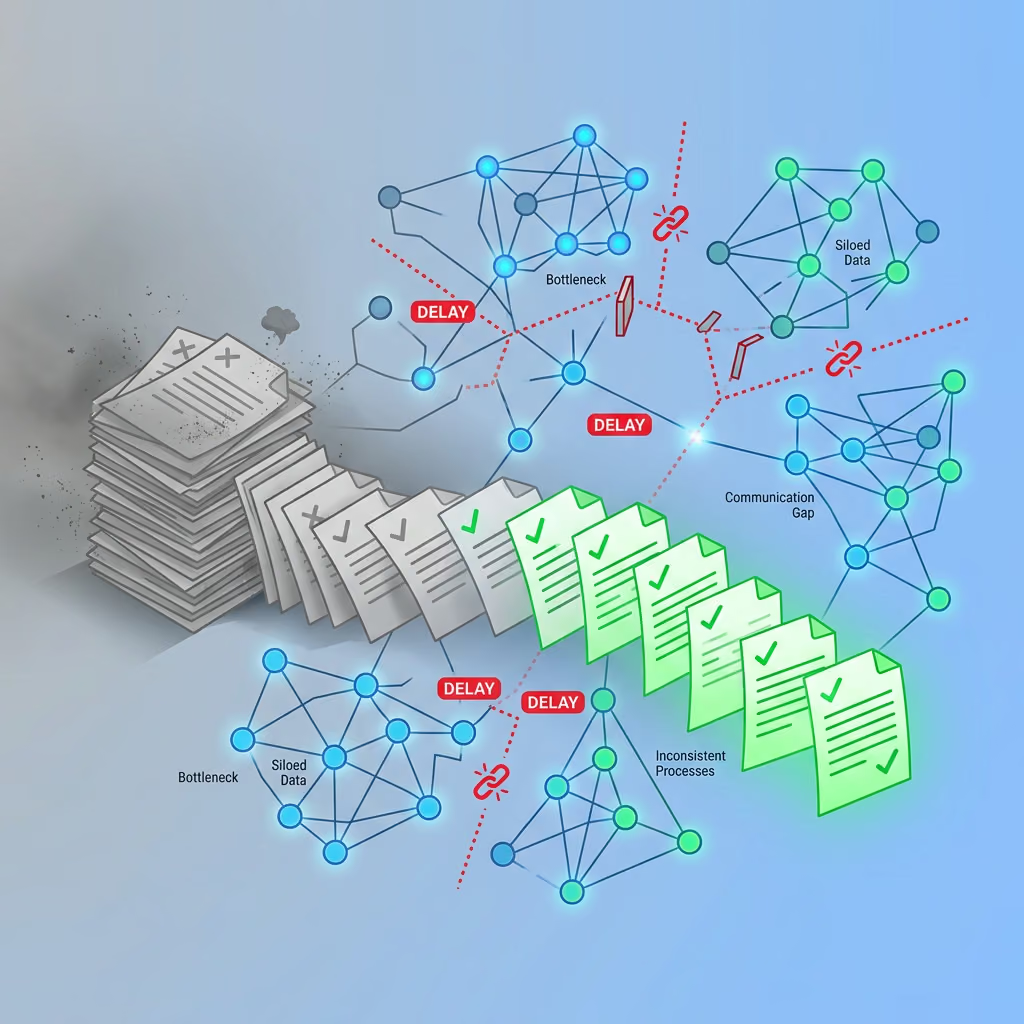


Spain Formalizes 2025 Corporate and Non-Resident Income Tax Declarations via Orden HAC/529/2026
Orden HAC/529/2026, published on 29 May 2026, formalizes the electronic submission framework for Spain's corporate (Form 200) and non-resident income tax declarations (Form 220) for the 2025 tax periods. This order reinforces Spain's digital compliance requirements, extending to permanent establishments and foreign-attribution regimes with Spanish territory presence.

Key takeaways
- Orden HAC/529/2026, published on 29 May 2026, formalizes electronic submission requirements for Forms 200 and 220 for the 2025 tax periods.
- The order explicitly includes permanent establishments and entities under foreign attribution-of-income regimes with a presence in Spanish territory.
- As of 19 September 2026, the order remains in force with no repeals or superseding instruments announced.
Context
Spain's Agencia Tributaria issued Orden HAC/529/2026 on 7 May 2026, published in the Boletín Oficial del Estado (BOE) on 29 May 2026. The order approves the use of Form 200 (Impuesto sobre Sociedades) and Form 220 (Impuesto sobre la Renta de no Residentes) for tax periods initiated between 1 January and 31 December 2025. This marks the first instance of a ministerial order specifically approving these forms for 2025 periods, distinguishing it from broader e-invoicing mandates.
The order is part of Spain's ongoing push toward mandatory digital tax compliance. It establishes general conditions and procedures for the electronic submission of both declarations, ensuring alignment with modern regulatory expectations. The order also covers permanent establishments and entities operating under foreign attribution-of-income regimes with a presence in Spanish territory, making it relevant for multinational corporations and cross-border structures.
What's Changing
Orden HAC/529/2026 introduces several key changes to Spain's tax compliance framework:
Electronic Submission Requirements
The order formalizes the electronic submission of both Form 200 and Form 220, reinforcing Spain's commitment to digital tax compliance. This requirement applies to all tax periods initiated between 1 January and 31 December 2025, ensuring uniformity in reporting practices.
Expanded Scope
The order explicitly extends its scope to permanent establishments and entities operating under foreign attribution-of-income regimes with a presence in Spanish territory. This provision is particularly relevant for multinational groups and cross-border structures, ensuring that all relevant entities adhere to the same compliance standards.
Procedural Clarifications
The order provides detailed instructions covering declaration and payment procedures. This includes specific guidelines for submitting the forms electronically, ensuring that taxpayers understand their obligations and the steps required to comply with the new framework.
Implications for Multinational Corporations
For multinational corporations and entities operating across borders, Orden HAC/529/2026 introduces several compliance considerations:
Compliance Obligations
Multinational corporations with subsidiaries or branches in Spain must ensure that their tax declarations for the 2025 period are submitted electronically using Form 200 or Form 220, as applicable. This requirement applies regardless of the entity's country of origin or headquarters location.
Permanent Establishments
The order's explicit inclusion of permanent establishments and entities under foreign attribution-of-income regimes ensures that all taxable entities with a presence in Spain are subject to the same compliance standards. This provision is particularly important for multinational groups with complex structures.
Risk Management
Failure to comply with the electronic submission requirements or accurately report income under the new framework could result in penalties or audits. Multinational corporations should prioritize understanding and implementing the new procedures to avoid potential legal and financial consequences.
Outlook
As of 19 September 2026, Orden HAC/529/2026 remains in force with no repeals or superseding instruments announced. The procedural and electronic submission rules established by the order continue to govern compliance obligations for the 2025 tax periods. While these periods are historical, the order's provisions remain relevant for entities that have not yet filed their declarations.
Near-Term Milestones
- Entities with 2025 tax periods must ensure that their submissions comply with the electronic requirements outlined in Orden HAC/529/2026.
- Multinational corporations should review their current compliance processes to ensure alignment with the order's provisions, particularly regarding permanent establishments and foreign attribution-of-income regimes.
Open Questions
- Will future ministerial orders extend these electronic submission requirements to subsequent tax periods?
- How will the Agencia Tributaria enforce compliance with these new rules, particularly for entities operating under complex cross-border structures?
Frequently asked questions
- What forms does Orden HAC/529/2026 apply to?
- Orden HAC/529/2026 applies to Form 200 (*Impuesto sobre Sociedades*) for corporate income tax and Form 220 (*Impuesto sobre la Renta de no Residentes*) for non-resident income tax.
- Who is affected by the electronic submission requirements?
- The electronic submission requirements apply to all entities with tax periods initiated between 1 January and 31 December 2025, including permanent establishments and entities operating under foreign attribution-of-income regimes with a presence in Spanish territory.
- What are the penalties for non-compliance?
- Failure to comply with the electronic submission requirements or accurately report income under the new framework could result in penalties or audits. Entities should prioritize understanding and implementing the new procedures to avoid potential legal and financial consequences.
- How does Orden HAC/529/2026 impact multinational corporations?
- Multinational corporations with subsidiaries or branches in Spain must ensure that their tax declarations for the 2025 period are submitted electronically using Form 200 or Form 220, as applicable. The order's explicit inclusion of permanent establishments ensures that all taxable entities with a presence in Spain are subject to the same compliance standards.