


France's E-Invoicing Reform Enters Post-Launch Phase: Oversight Committee and SME Mandate Planning
France's mandatory e-invoicing reform, which became fully effective on September 1, 2026, has shifted its focus from deployment to post-launch governance. The government is establishing a regular oversight committee led by Minister David Amiel to prepare for the 2027 emission obligation for SMEs and micro-enterprises, marking a new phase in the reform cycle.
Key takeaways
- France's mandatory e-invoicing reform entered its post-launch phase on September 1, 2026, with large enterprises and ETIs now required to emit e-invoices.
- An oversight committee led by Minister David Amiel will prepare for the 2027 emission obligation for SMEs and micro-enterprises.
- The no-penalty 2026 window is a transitional buffer, not a rollback.
- Approximately two-thirds of French enterprises have selected one of 149 state-approved platforms, indicating meaningful but incomplete market penetration at launch.
- The oversight committee's focus on SME readiness gaps will be crucial in ensuring a smooth transition to e-invoicing for smaller businesses.
Context: The Shift to Post-Launch Governance
The mandatory reception phase of France's e-invoicing reform began on September 1, 2026, with large enterprises and mid-sized enterprises (ETIs) now required to emit e-invoices. SMEs and micro-enterprises have had their emission mandate deferred to 2027, with no sanctions applied during 2026 for non-compliance. This policy choice aims to reduce near-term friction and allow the ecosystem to stabilize.
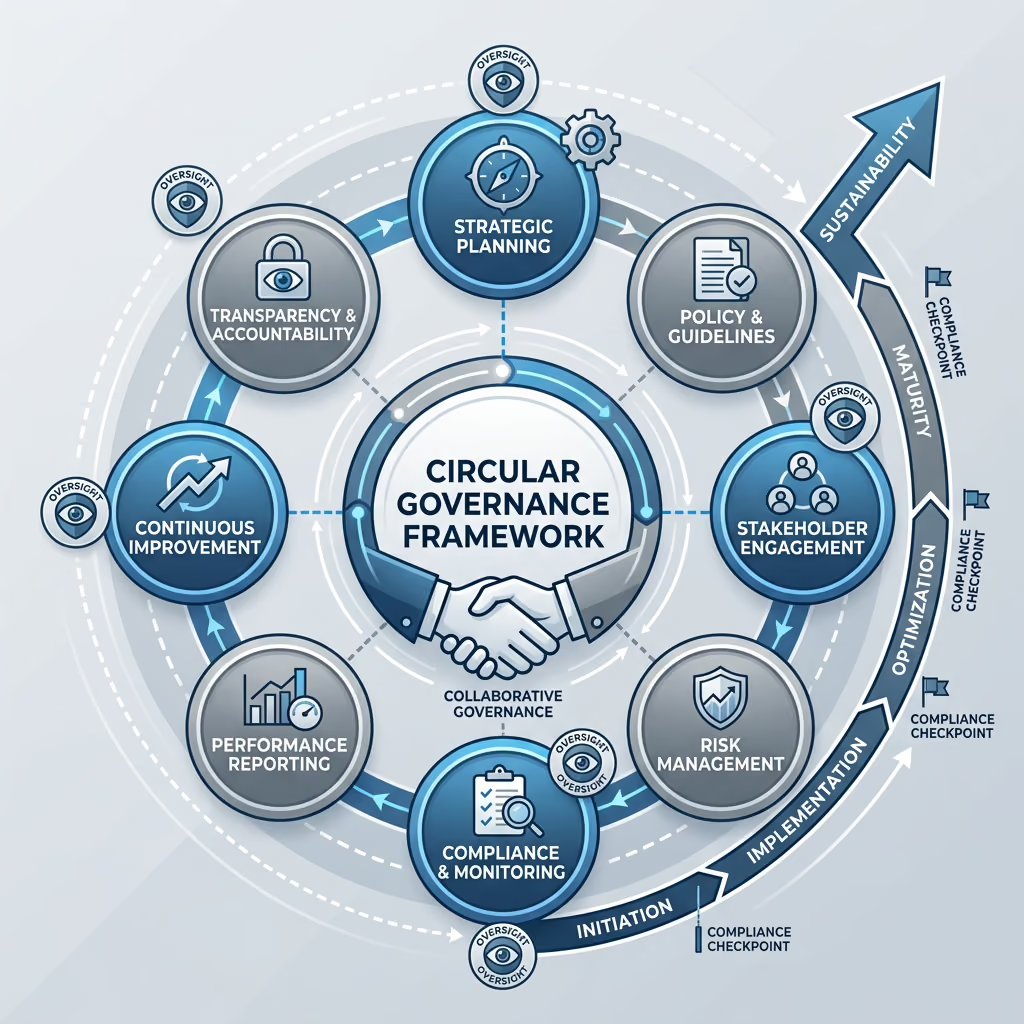
The establishment of a regular oversight committee, led by Minister David Amiel, signals a shift from crisis-mode project management to institutionalized compliance monitoring. The committee will track adoption rates, address SME readiness gaps, and coordinate the regulatory calendar for the 2027 emission mandate. This phased, committee-driven approach is consistent with the reform's broader objective of aligning France with the EU VAT directive ViDA while minimizing administrative disruption.
What's Changing: The Oversight Committee and SME Mandate
The oversight committee, led by Minister David Amiel, will play a crucial role in preparing for the 2027 emission obligation for SMEs and micro-enterprises. The committee will track adoption rates, address readiness gaps, and coordinate the regulatory calendar. This represents a distinct phase of the reform cycle not covered in earlier deadline-focused reporting.
The 2027 SME/micro-enterprise emission mandate is the next hard policy milestone. The no-penalty 2026 window is a transitional buffer, not a rollback. The 149-platform ecosystem and two-thirds adoption rate are the baseline metrics against which 2027 readiness will be measured.
Implications for SMEs
For SMEs and micro-enterprises, the deferral of the emission mandate to 2027 provides additional time to prepare for compliance. However, it also means that these businesses must accelerate their preparations to meet the upcoming deadline.
The oversight committee's focus on SME readiness gaps indicates that the government is aware of the challenges faced by smaller businesses. The committee's work will likely include targeted support and guidance to help SMEs navigate the transition to e-invoicing.
Outlook: What to Watch
The next hard policy milestone is the 2027 emission mandate for SMEs and micro-enterprises. The oversight committee's work in tracking adoption rates, addressing readiness gaps, and coordinating the regulatory calendar will be crucial in ensuring a smooth transition.
The 149-platform ecosystem and two-thirds adoption rate are the baseline metrics against which 2027 readiness will be measured. The oversight committee's efforts to address the remaining one-third of enterprises not yet on a state-approved platform will be a key focus.
Frequently asked questions
- What is the role of the oversight committee in France's e-invoicing reform?
- The oversight committee, led by Minister David Amiel, will track adoption rates, address SME readiness gaps, and coordinate the regulatory calendar for the 2027 emission mandate.
- When is the emission mandate for SMEs and micro-enterprises?
- The emission mandate for SMEs and micro-enterprises is deferred to 2027. This deferral provides additional time for these businesses to prepare for compliance.
- What is the current adoption rate of state-approved platforms in France?
- Approximately two-thirds of French enterprises have selected one of 149 state-approved platforms, indicating meaningful but incomplete market penetration at launch.
- Are there any sanctions for non-compliance during 2026?
- No, there are no sanctions being applied during 2026 for non-compliance. This policy choice aims to reduce near-term friction and allow the ecosystem to stabilize.
- What is the next hard policy milestone in France's e-invoicing reform?
- The next hard policy milestone is the 2027 emission mandate for SMEs and micro-enterprises. The oversight committee's work in tracking adoption rates, addressing readiness gaps, and coordinating the regulatory calendar will be crucial in ensuring a smooth transition.